Did America ever have a plan for the Middle East? | The EconomistWhat is it about the Middle East that has kept America involved for so long? On the latest Insider our top editors discuss Washington’s long-standing failure to forge a coherent policy for the region, what America is actually trying to achieve in the Middle East and the role the Gulf states have played in keeping it there.
US energy secretary on Venezuela as a model for others | The EconomistCould America’s oil deal in Venezuela be a model for other countries? Chris Wright, America’s energy secretary, says “if it’s helpful”. He spoke to Charlotte Howard, The Economist’s US editor, on-stage on the sidelines of the UN General Assembly. #oil #venezuela #ukraine #america #usa Read why the White House may soon announce a nonsensical diesel-export ban: http://bit.ly/4y8xK20 Subscribe to The Econom...
Are teenagers getting dumber? | The EconomistAverage test scores in rich countries plummeted after the covid-19 pandemic—and they haven’t rebounded since. The Economist has analysed the data to understand why young people are struggling at school, and which countries are getting it right. Read more: https://bit.ly/4r0oLNA Subscribe to The Economist: https://econ.st/3Mia0pz Download The Economist app: https://econ.st/4qdVVaA Follow us on X: https://x.com/TheEconomist Follow us o...
Inside an elite Ukrainian drone unit: a special report | The EconomistWhat goes on inside an elite Ukrainian drone unit? How do its soldiers wage the battles of today while simultaneously building the weapons of tomorrow? Join Zanny Minton Beddoes, The Economist’s editor-in-chief, as she visits one of Ukraine’s most lethal drone units, the first foreign journalists to do so. She asks the people at the heart of the country’s war machine how it operates, what it takes to keep up with...
Eric Schmidt on the dangers of autonomous AI in war | The EconomistWhat happens when an autonomous AI can wage war? Eric Schmidt, former CEO of Google, tells Zanny Minton Beddoes, our editor-in-chief, why targeting decisions must never be left to a machine.
How Trump made the midterms all about himself | The EconomistDonald Trump has made the midterms all about himself. He won’t appear on the ballot in November, but he’s asked his supporters to pretend that he is—whether it will help his party or not. Read more: bit.ly/4iGYHFl Subscribe to The Economist: https://econ.st/3Mia0pz Download The Economist app: https://econ.st/4qdVVaA Follow us on X: https://x.com/TheEconomist Follow us on Instagram: https://www.instagram.com/theeconom...
Europe is not ready for the dystopian future of war | The EconomistAs Russian drones hit civilian infrastructure across Ukraine, The Economist’s editor-in-chief, Zanny Minton Beddoes, travelled to the command centre of one of the country’s elite drone brigades. She sat down with Oleksiy Honcharuk, the co-founder of Ukraine’s first mil-tech unicorn. He outlined why he believes that Europe is not ready for the dystopian future of war. To watch the full report click the link. Watch ...
Eric Schmidt: we aren’t going to pause AI progress | The Economist"We’re not going to do a pause." Eric Schmidt, former CEO of Google, tells our editor-in-chief, Zanny Minton Beddoes, why the incentives make an AI pause impossible, and what America and China should agree to instead.
Another global choke point is under threatIran has gained leverage over a new global choke point—the Bab al-Mandab strait. Its ally, the Houthi rebel militia, seized new territory on Yemen’s coast that borders the strait, through which roughly 12% of global trade traverses every day.
Why Russia is building its own version of Starlink | The EconomistRussia is building its own equivalent of Starlink—and it could be game-changing for the war in Ukraine. Drone “motherships” are appearing over Kyiv. Edward Carr, The Economist’s deputy editor, and a panel of our expert journalists just back from Ukraine discuss where the war goes next, and why nobody in Kyiv expects a serious peace deal before winter. #Ukraine #Russia #Putin #Drones #Starlink 00:00 - Russia’s o...
Inside Ukraine's elite drone command bunker | The EconomistUkraine’s war against Russia is dominated by drones, data and a relentless cycle of innovation. The Economist’s editor-in-chief, Zanny Minton Beddoes, saw this first-hand when she and some of her colleagues were the first foreign journalists to visit the command centre of Ukraine’s elite drone brigade, Nemesis, near the front line. Watch the full report: http://bit.ly/4y1VO6F Subscribe to The Economist: https://econ.st/3Mi...
Russia will soon have its own version of Starlink | The EconomistRussia is developing its own equivalent of Starlink. Zanny Minton Beddoes, our editor-in-chief and Alex Turner, our defence editor who, along with other colleagues, have just returned from Ukraine, discuss how close Rassvet is to becoming operational and what its use would mean for the war.
How to replace one of the world's most dangerous jobs | The EconomistMines are some of the worlds most dangerous places to work. Don Weinland, The Economist’s China Business and Finance Editor, travelled to the Yimin coal mine to see how autonomous technology is taking people out of the pit. And all this is being powered by Chinese telecoms company—Huawei. Read more about how Huawei is branching out from its traditional base of telecom clients: bit.ly/4xWtse7 Subscribe to The Econom...
What happens when the West's interceptors run out?Russian ballistic missiles are hitting Ukrainian cities in ever-growing numbers. Ukraine is struggling to intercept them because of a global shortage of Western air-defence missiles, caused primarily by America's war with Iran. Subscribe to The Economist: https://www.economist.com/subscribe Download our app: https://www.economist.com/get-the-app Follow The Economist on Instagram: https://www.instagram.com/theeconomist/ Follow The Ec...
The dangers of accidentally creating a conscious AI | The EconomistWhether artificial intelligence is conscious has preoccupied philosophers, neuroscientists and science-fiction writers for decades. Machines haven’t become self-aware or developed real feelings yet. But could they? As AI models get more sophisticated, researchers are taking the possibility seriously. Alex Hern, The Economist’s AI writer, sits down with Alok Jha, our science and technology editor, to unpack the latest...
Could AIs become conscious? | The EconomistAre artificial intelligence models conscious? For The Economist’s science and technology editor, Alok Jha, the answer is no—not yet anyway. But, as he explains to our AI writer, Alex Hern, scientific developments on the horizon could change the way we view machines. #AI #artificialintelligence #technology #science Watch the full show: http://bit.ly/4A7FtPb Sign up to the Insider newsletter: https://econ.st/4nOyzIb Subscribe to The Eco...
Is Europe facing a "Muslim takeover"? The data says otherwise | The EconomistPanic about Islam in Europe is spreading. In several European countries around half the population believe that Islam is incompatible with Western values. But in reality Muslims make up only a small percentage of Europe’s people, and their attitudes largely resemble their compatriots. Why, then, are so many Europeans against Islam? Edward Carr, The Economist’s deputy editor, and a panel of our expert journ...
How the anti-Muslim right and Islamists feed off each other | The EconomistGermany’s populist-right party, the AfD, has just won big in Saxony-Anhalt, on an anti-Muslim platform. The Economist’s journalists Sacha Nauta and Tom Nuttall talk about the risks Europe faces both from Islamism (political Islam) and from illiberal reactions to it. #germany #afd #europe #islam #muslim Watch the full show: http://bit.ly/4yxapXE Sign up to the Insider newsletter: https://econ.st/4nOyzIb S...
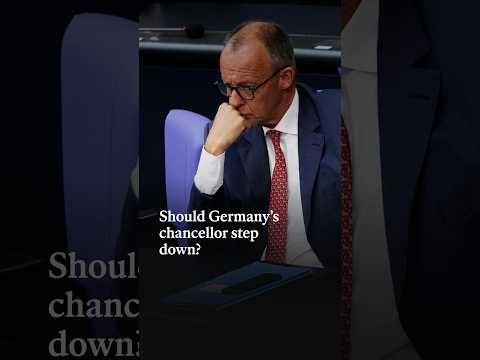
Should Germany’s chancellor step down? | The EconomistGermany’s chancellor, Friedrich Merz, is under serious pressure. The Alternative for Germany, or AfD, has had a historic win in a state election. It is the closest a populist right party has come to forming a government anywhere in Germany since the second world war. Without a clear strategy to deter the rise of the AfD, some in Merz's party wonder if he should resign. Read more: bit.ly/3V73lCx Subscribe to The Economist: https:...
The staggering cost of insuring the Bayeux tapestry | The EconomistThe Bayeux tapestry is one of the world’s most famous pieces of medieval art—and it’s just been insured for $1.1bn. The Economist's culture editor, Alexandra Suich Bass, explores how this eye-watering figure was agreed on. #bayeux #bayeuxtapestry #history #britishmuseum Read more: https://bit.ly/4A57nvl Subscribe to The Economist: https://econ.st/3Mia0pz Download The Economist app: https://econ.st/4qdVVaA Foll...
Nvidia’s boss is popular but vulnerable | The EconomistThe boss of Nvidia, the world’s most valuable company, was once described by Mark Zuckerberg as “like Taylor Swift, but for tech”. The Economist’s global business writer, Shailesh Chitnis, met Jensen Huang in Taiwan earlier this year and observed the eager fans following in his wake. He joins Edward Carr, deputy editor, and a panel of experts to discuss why despite the mania Mr Huang’s company still faces risks. #Nvidia...
Nvidia is funding an AI boom. Will it trigger a financial crash? | The EconomistNvidia is synonymous with the AI boom. Global demand for its chips has made it the world’s most valuable company. Next year it may also become the most profitable. But in recent months Nvidia has been busy investing in and arranging loans for its customers. Some worry this mirrors the dotcom crash, when hardware giants paid startups with poor prospects to buy their kit. Nvidia retorts that such schemes cou...
Can the Chinese government end AI romances? | The EconomistThe Chinese government wants to end AI romances. In order to comply with new government rules, Chinese tech firms are stripping human-like personas from their chatbots. Josh Spencer, The Economist’s Asia news editor, explains why that may break millions of hearts in the process. Read more: bit.ly/4w8Q2iy Subscribe to The Economist: https://econ.st/3Mia0pz Download The Economist app: https://econ.st/4qdVVaA Follow us on X: h...
Nepal’s disaster is a sign of warming times | The EconomistThe floods in the Himalayas, that have left over 1,000 dead and more than 4,000 missing, began as an unpredictable glacial avalanche. Glacial avalanches have always been a hazard wherever glaciers sit on steep mountain slopes. But as Earth’s climate warms, they will become more common. Read more: bit.ly/4gINNvX Subscribe to The Economist: https://econ.st/3Mia0pz Download The Economist app: https://econ.st/4qdVVaA Follow u...
Sweden’s PM on working with the hard right | The EconomistSweden goes to the polls soon, and the prime minister’s Moderate Party is behind in the polls. The Economist’s geopolitics editor, David Rennie, asks Ulf Kristersson whether he’s alienated centrist voters by embracing the hard-right Sweden Democrats. #sweden #europe #politics #election Watch the full show: http://bit.ly/4x6S16T Sign up to the Insider newsletter: https://econ.st/4nOyzIb Subscribe to The Economist: htt...
Why are kids becoming fussier eaters? | The EconomistAmerican children today are the pickiest eaters in history, and it might be because of their parents. Alexandra Suich Bass, The Economist’s culture editor, examines what has happened and how to fix it. #children #baby #parenting #fussyeaters #kids Read more: https://bit.ly/4qUKtme Subscribe to The Economist: https://econ.st/3Mia0pz Download The Economist app: https://econ.st/4qdVVaA Follow us on X: https://x.com/TheEconomist Fo...
Sweden’s PM on whether Europe can deter Russia for ever | The EconomistCan Europe deter Russia for ever? Sweden’s prime minister, Ulf Kristersson, tells The Economist’s geopolitics editor, David Rennie, that however the war ends it will define Europe’s security situation for at least a generation to come. #Sweden #Europe #Trump #USA #Politics Watch the full show: http://bit.ly/4x6S16T Sign up to the Insider newsletter: https://econ.st/4nOyzIb Subscribe to The Economist: http...
What is going on in the bond market? | The EconomistBond yields across the rich world are hitting record highs. Strangely it’s both good news and bad. The Economist’s acting economics editor, Archie Hall, explains why. Read more: bit.ly/461Q1BW Subscribe to The Economist: https://econ.st/3Mia0pz Download The Economist app: https://econ.st/4qdVVaA Follow us on X: https://x.com/TheEconomist Follow us on Instagram: https://www.instagram.com/theeconomist Follow us on Facebook: http...
Sweden’s PM on whether NATO can depend on Trump | The EconomistSweden's decision to join NATO was a remarkable turnaround after decades of neutrality. The country was left with little choice after Russia invaded Ukraine; it became a staunch supporter of Kyiv and raised defence spending. But with the transatlantic alliance under strain is the security of Sweden—and Europe—more uncertain than ever? Ulf Kristersson, Sweden’s prime minister, spoke to David Rennie, The Economist’s...
India's surprising baby bustFor decades Indians were told they were having too many babies. Now India's fertility rate has fallen below the replacement rate of 2.1—the average number of babies needed per woman to keep the population stable. Why is the world’s most populous country having a baby bust?
How Donald Trump’s immigration crackdown is making America weaker | The EconomistAmericans were horrified when federal immigration agents killed Renée Good and Alex Pretti in Minneapolis earlier this year. Donald Trump responded by firing his border-patrol head and homeland-security adviser. Their replacements have sought to keep his mass-deportation drive out of the headlines, but behind the scenes it has grown more effective than ever. Edward Carr, The Economist’s deputy editor, ...
What Americans think of Trump's immigration policies | The EconomistDonald Trump vowed to carry out the largest deportation campaign in America’s history if he was elected. As president, he’s delivering on that promise, but American voters are still unhappy. The Economist’s top editors discuss how Americans are souring on President Trump’s immigration crackdown. #Trump #US #USA #America #ICE Watch the full show: http://bit.ly/4i0r6pA Sign up to the Insider newsletter: https:/...
Can artificial intelligence become conscious? | The EconomistScientists are trying to figure out whether artificial intelligence could one day wake up. Whether you believe AI can become conscious or not, many are already treating them as sentient beings. #ai #artificialintelligence #science #technology Read more: https://bit.ly/3T08PhN Subscribe to The Economist: https://econ.st/3Mia0pz Download The Economist app: https://econ.st/4qdVVaA Follow us on X: https://x.com/TheEconomist ...
What is Donald Trump's border wall really for?Donald Trump is finally building his border wall, thanks to $47bn from the One Big Beautiful Bill Act. But migrant crossings have already plummeted. So what is the wall actually for? Aryn Braun, our West Coast correspondent, reports from the southern border.
Welcome to the cult of wellness, a phenomenon of mind-and-body worship that is shaking up industries from health, f… https://t.co/X3wGTOgGyb
The world is becoming a temple to wellness. Is this quackery?Welcome to the cult of wellness, a phenomenon of mind-and-body worship that is shaking up industries from health, food and beauty to insurance and property


 CRONOLOGICO
 AUTORI POST